Practical Risk Management & Disaster Recovery for Payroll
Strengthen your Disaster Recovery for Payroll with practical risk management, continuity planning and Paytools' templates, risk register and drill scheduling.
Why continuity matters and how to strengthen your payroll resilience
Payroll is one of the most business-critical functions in any organisation. When people aren't paid correctly or on time, your organisation can face real financial and compliance risks. Yet, payroll is often under-resourced when it comes to risk management and business continuity planning.
Recent large-scale outages — such as the AWS service disruption that impacted businesses globally — have highlighted one key truth: incidents are no longer hypothetical. They will happen, now and in the future.
The new question is not if, but how prepared your payroll operation is.
Good news: with modern tooling, the process of preparing, documenting and testing payroll continuity has become easier than ever before.
What happens when payroll isn't prepared?
Even a short outage or internal disruption can cause payroll delays or errors.
Consequences often include:
Incidents like the AWS outage reveal how interdependent payroll systems are — cloud-based HCMs, time and attendance platforms, banking services and even authentication systems. A single point of failure upstream can cascade across the entire payroll function.
This is why practical, repeatable and tested business continuity planning is essential.
How do you test payroll business continuity?
Having a plan is one thing; knowing it actually works is another.
Mature payroll functions adopt a cycle of:
Scenario-based testing can include:
This ensures your team can confidently execute the plan during real incidents — not discover gaps under pressure.
Response plan library: best-practice templates ready to use
What it is: A collection of ready-made continuity and incident response plan templates built using industry best practice — covering system outages, data loss, staff absence, banking failures, integration disruptions, payroll calendar clashes and more.
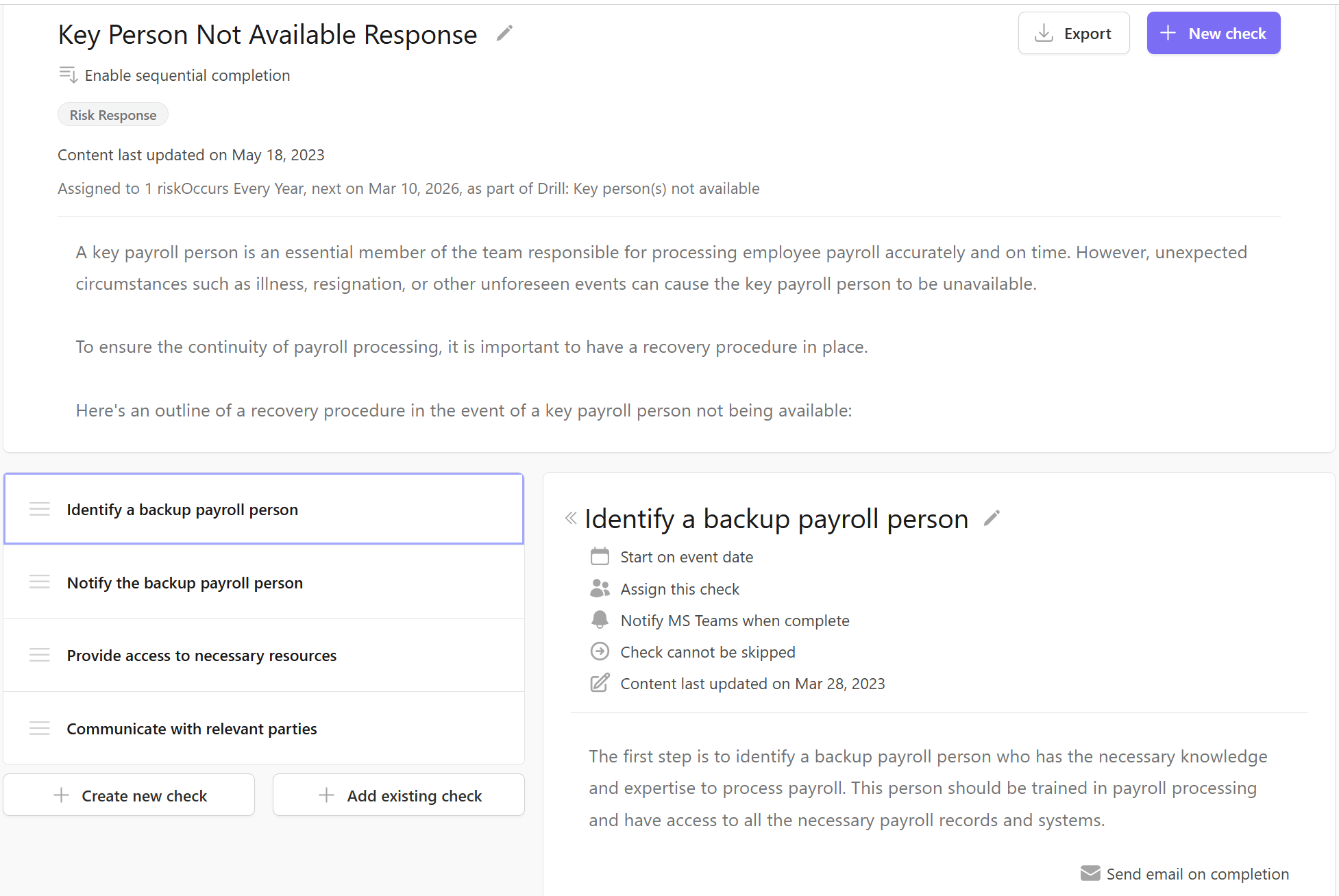
How it benefits you:
With these templates, payroll teams no longer need to start from scratch to build continuity documents.
Scheduled drills: annual tabletop & scenario testing
What it is: A built-in scheduling tool that prompts you to run annual or quarterly resilience tests — like tabletop exercises — so key staff can walk through your continuity plan together.
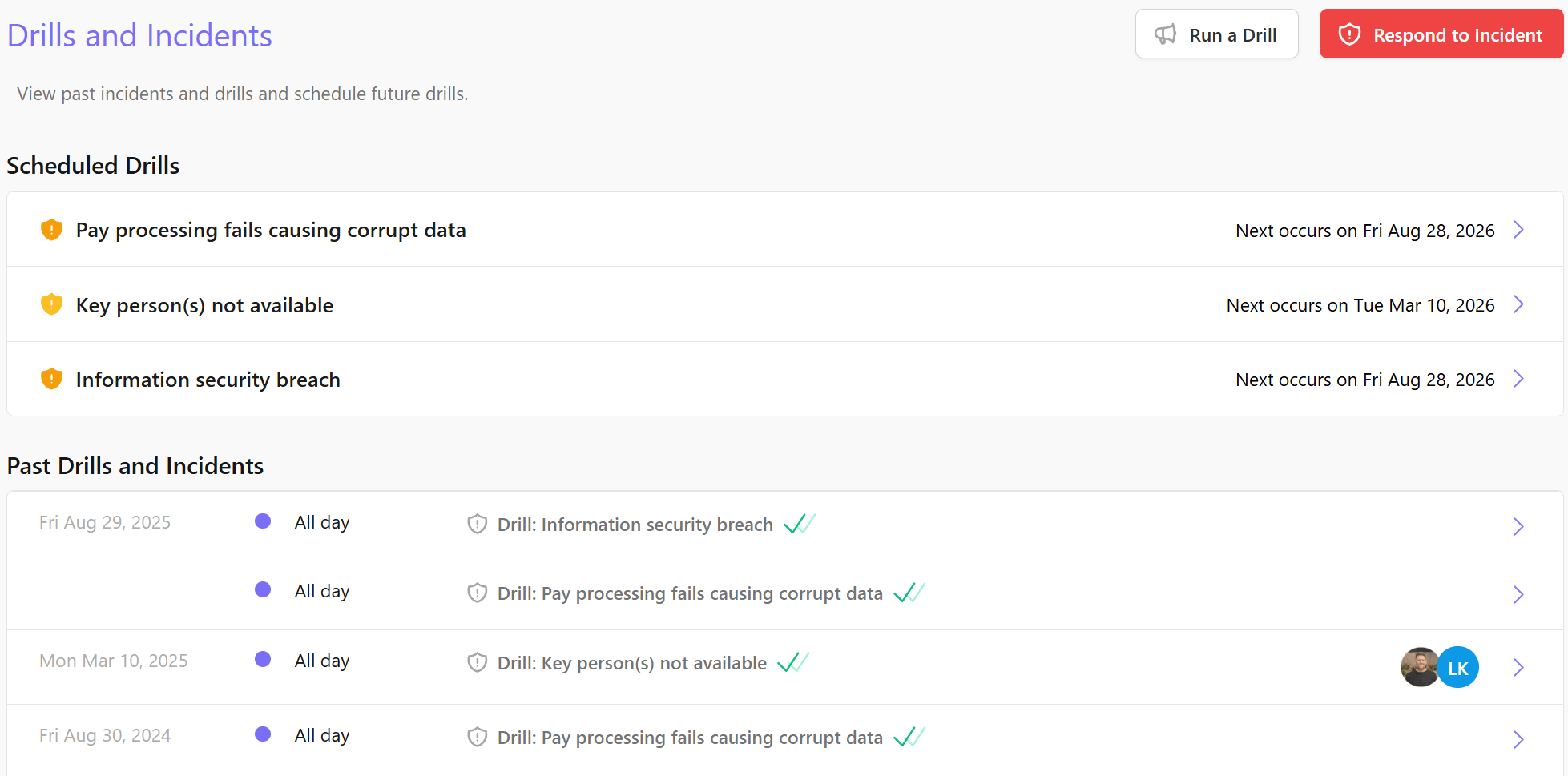
This includes:
How it benefits you:
Running drills becomes simple, predictable and part of your natural payroll rhythm.
A positive shift
Payroll teams have always worked incredibly hard under pressure. The challenge historically has been a lack of tools, not a lack of skill or commitment.
What's changing now is that the technology and frameworks finally exist to support payroll teams in building stronger, more resilient practices with far less effort. Paytools is designed specifically to make this uplift achievable, practical and ongoing.
Build resilient payroll operations with Paytools
Whether you're starting your first continuity plan or maturing an existing framework, Paytools gives you the structure, templates and testing cycles you need to manage payroll risk effectively.
If you'd like to learn more about Paytools, book a demo today!